Swan Secrets
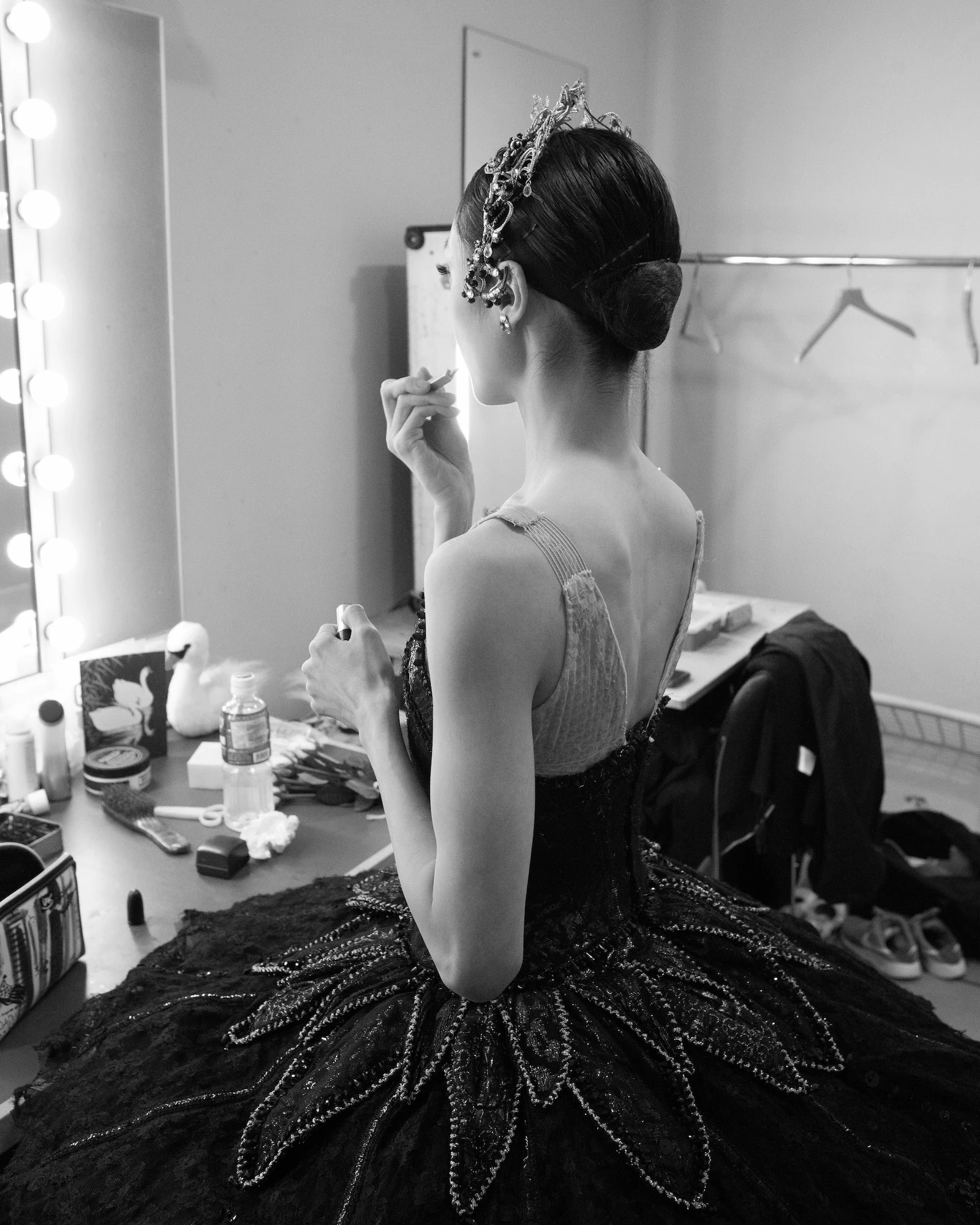
An intimate look backstage as Birmingham Royal Ballet’s principal dancer Miki Mizutani transforms from Odette to Odile in Swan Lake by Caroline Holden.
An intimate look backstage as Birmingham Royal Ballet’s principal dancer Miki Mizutani transforms from Odette to Odile in Swan Lake by Caroline Holden.
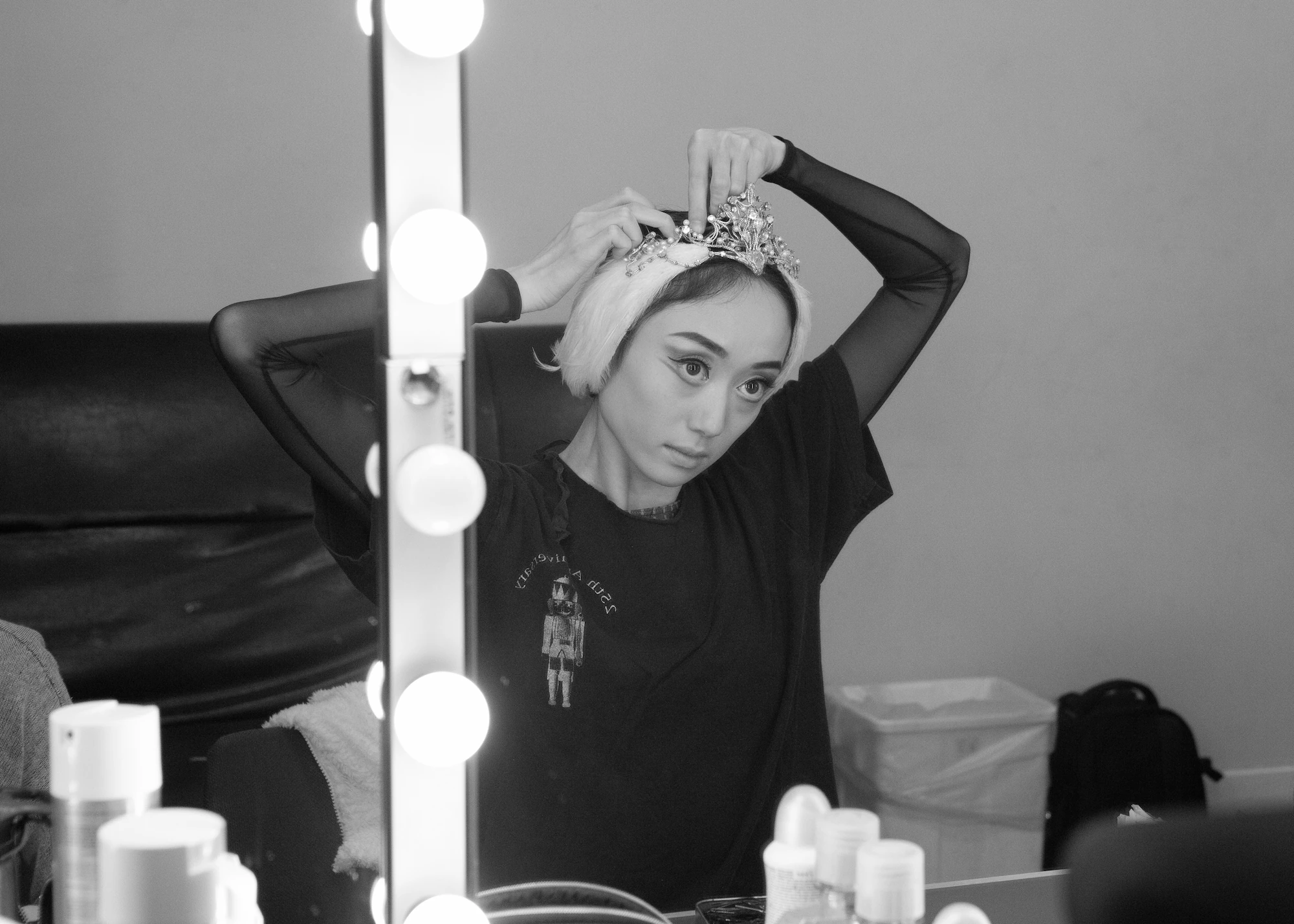
Photography Caroline Holden, by kind permission of Birmingham Royal Ballet. Miki Mizutani.
Leaving behind the materialistic and deceptive world of the court and his obligation to marry, Prince Siegfried goes hunting by a lake. Taking aim at a flock of swans, their leader Odette, the White Swan, rushes forward to protect the others. She tells the prince that she was cursed by the evil sorcerer Von Rothbart, to be a swan by day, returning to her human form by the light of the moon.
The lake formed by the tears of the Swan Queen’s mother, isolates the enchanted swans from the mortal world. Its reflective waters represent truth, fatal illusion, and the ultimate transcendence of true love. It mirrors Odette’s purity, but also facilitates Von Rothbart’s illusions, reflecting the deceptive nature of the Black Swan, Odile.
The obsessed sorcerer transforms his daughter Odile to resemble Odette, and the prince tragically falls for the illusion and pledges his love. Heartbroken, he returns to the lake. Von Rothbart appears in the storm, and threatens the lovers, who throw themselves into the lake in desperation. Their sacrifice breaks the curse, and their souls are united in eternal love.
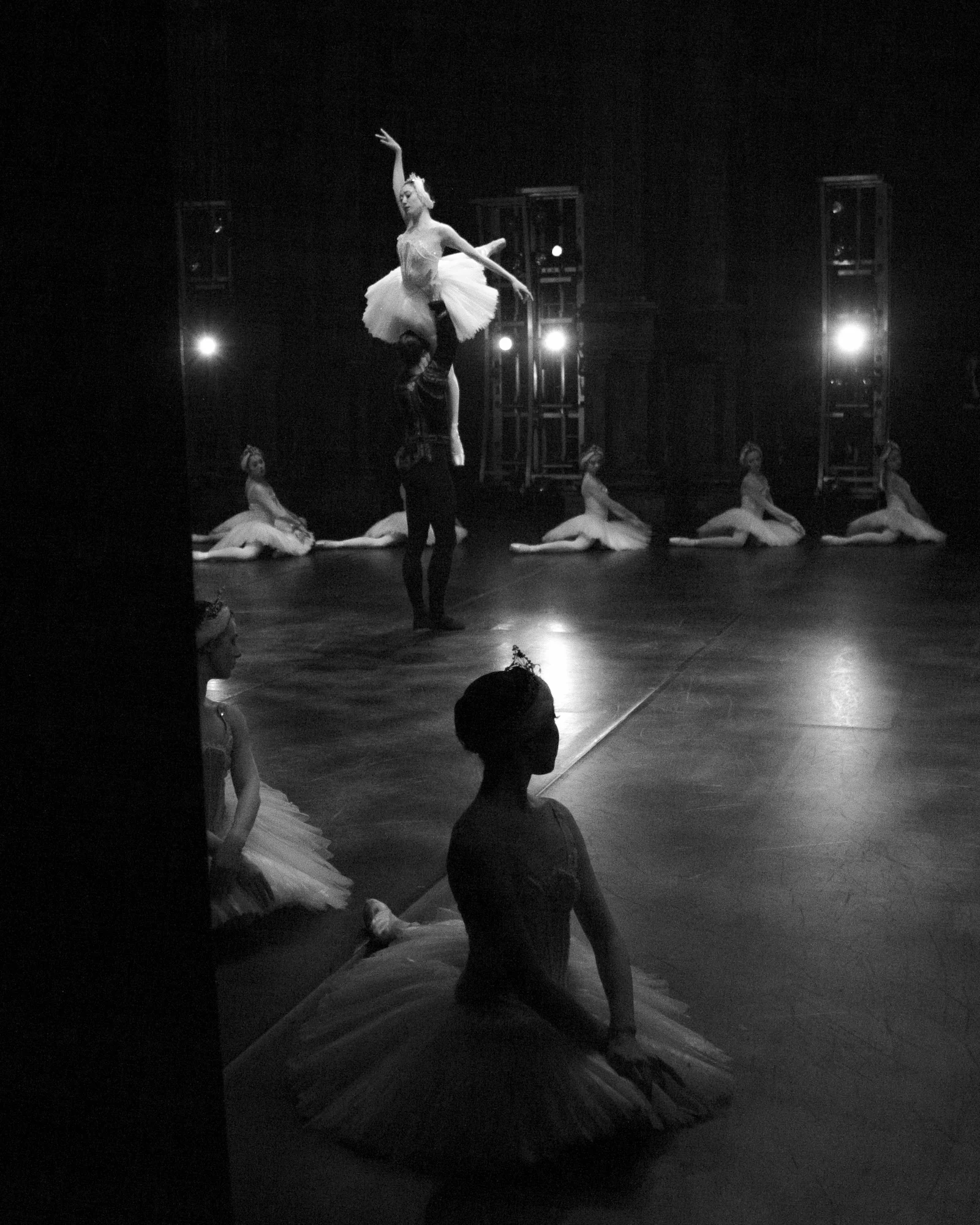
Photography Caroline Holden, by kind permission of Birmingham Royal Ballet. Miki Mizutani and Lachlan Monaghan.
Nearly 150 years since it was first performed by the Bolshoi Ballet, this tragic story set to Tchaikovsky’s emotional score, is considered one of the most famous classical ballets and continues to be performed around the world.
The roles of Odile and Odette were originally danced by two separate dancers, but it has become customary for one ballerina to dance both parts. The challenge lies in performing two completely contrasting characters within the same ballet, transitioning from fluid lyricism to sharp, fiery seduction.
Odette the Swan Queen, the heroine of the ballet represents a pure, idealized and fragile soul. The black swan Odile, Von Rothbart’s dangerous daughter, embodies passion, allure and uninhibited sexuality.
Odette is danced in a fluid and ethereal way, with a delicate resistance in the arms to mimic flapping wings. Odile is virtuosic, demanding attention with jumps and turns, including the famous 32 fouetté in Act III introduced by the Italian ballerina Pierina Legnani in 1895. The choreography for Odile and the prince’s pas de deux is one of the most famous in repertory, renowned for both its technical difficulty and its dramatic cohesion.
Dancers universally describe this dual role as the ultimate test of stamina and artistry. Margot Fonteyn emphasized that the two roles are two halves of the same illusion. She and her contemporaries noted that the transition must be emotionally believable, with Odile serving as the darker, manipulative reflection of the innocent Odette.
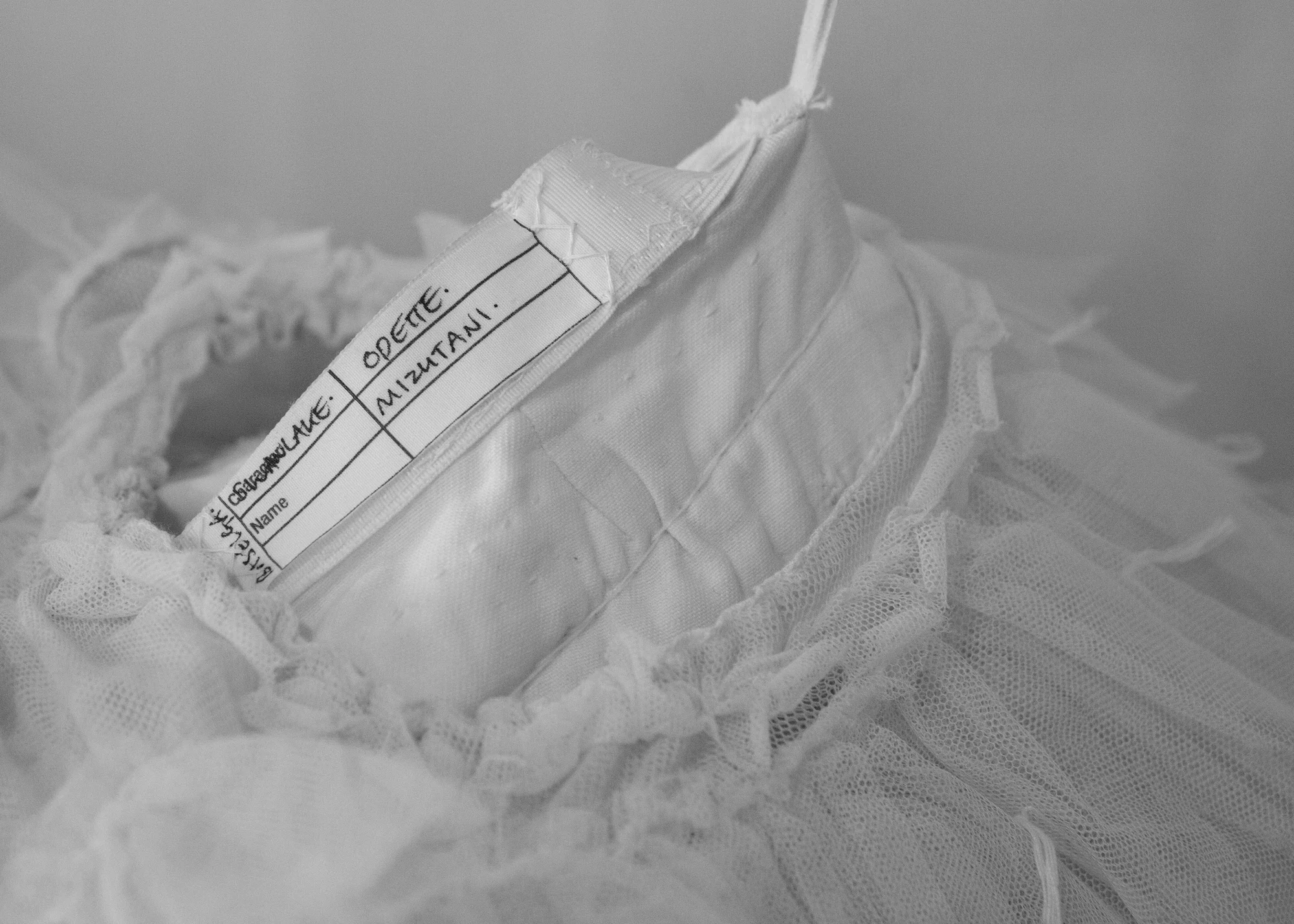

Photography Caroline Holden, by kind permission of Birmingham Royal Ballet.
When did you first dance the dual role of Odette/Odile?
I made my debut as Odette/Odile in 2020. I was cast to dance the role in 2015, but unfortunately, I got injured and had to miss my debut. That year I was cast not only as Odette/Odile, but also in the corps de ballet swans and several soloist roles, so it was an incredibly demanding period. I suffered a stress fracture in the second metatarsal of my left foot and had to withdraw from the performances.
So, when I finally got the chance to perform this iconic role in 2020, I was incredibly happy. It made the debut even more special because I’d waited five years for it.
Back in 2015, the casting was posted on the notice board. I remember being so surprised that I immediately called my mum to tell her the news!
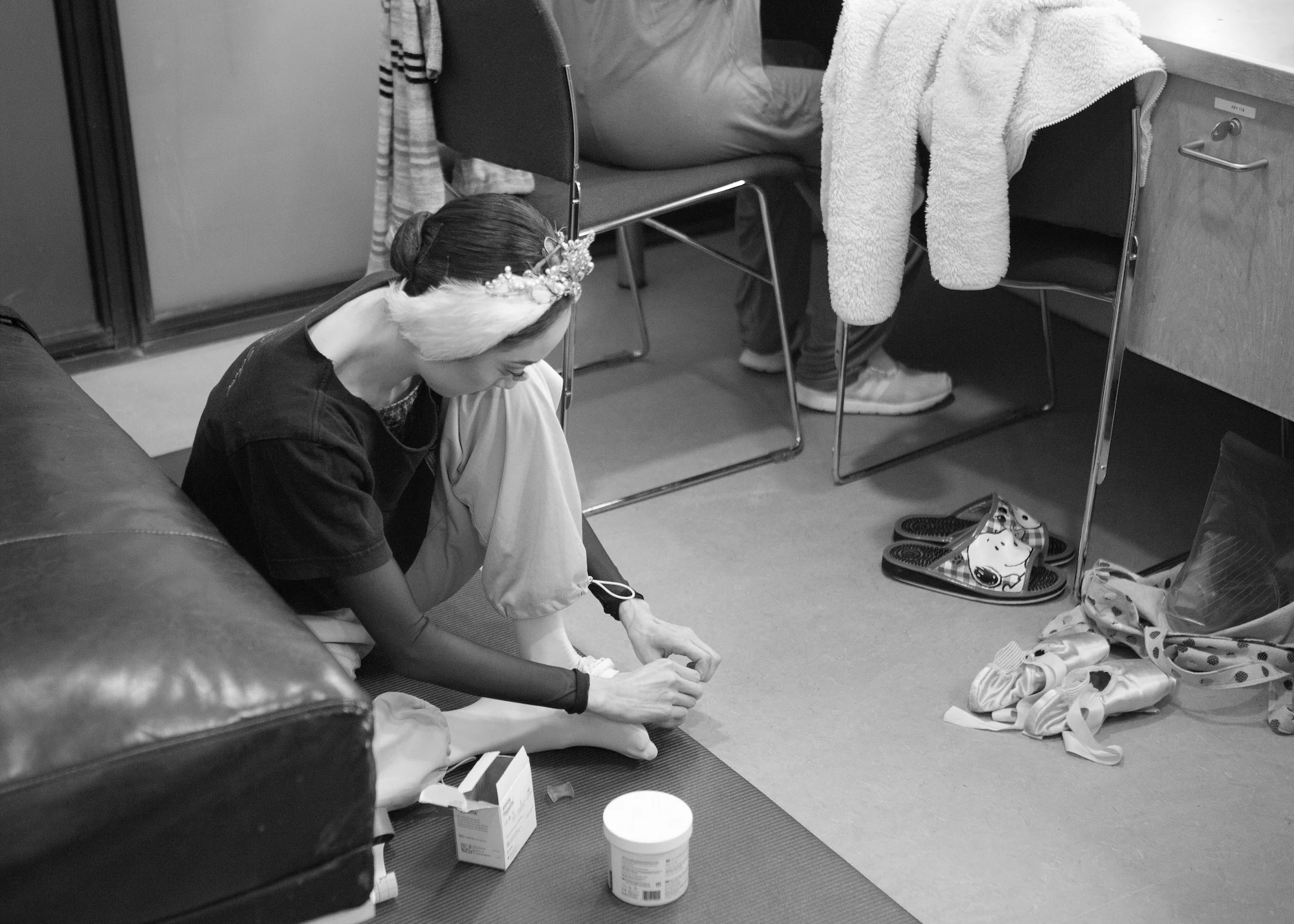
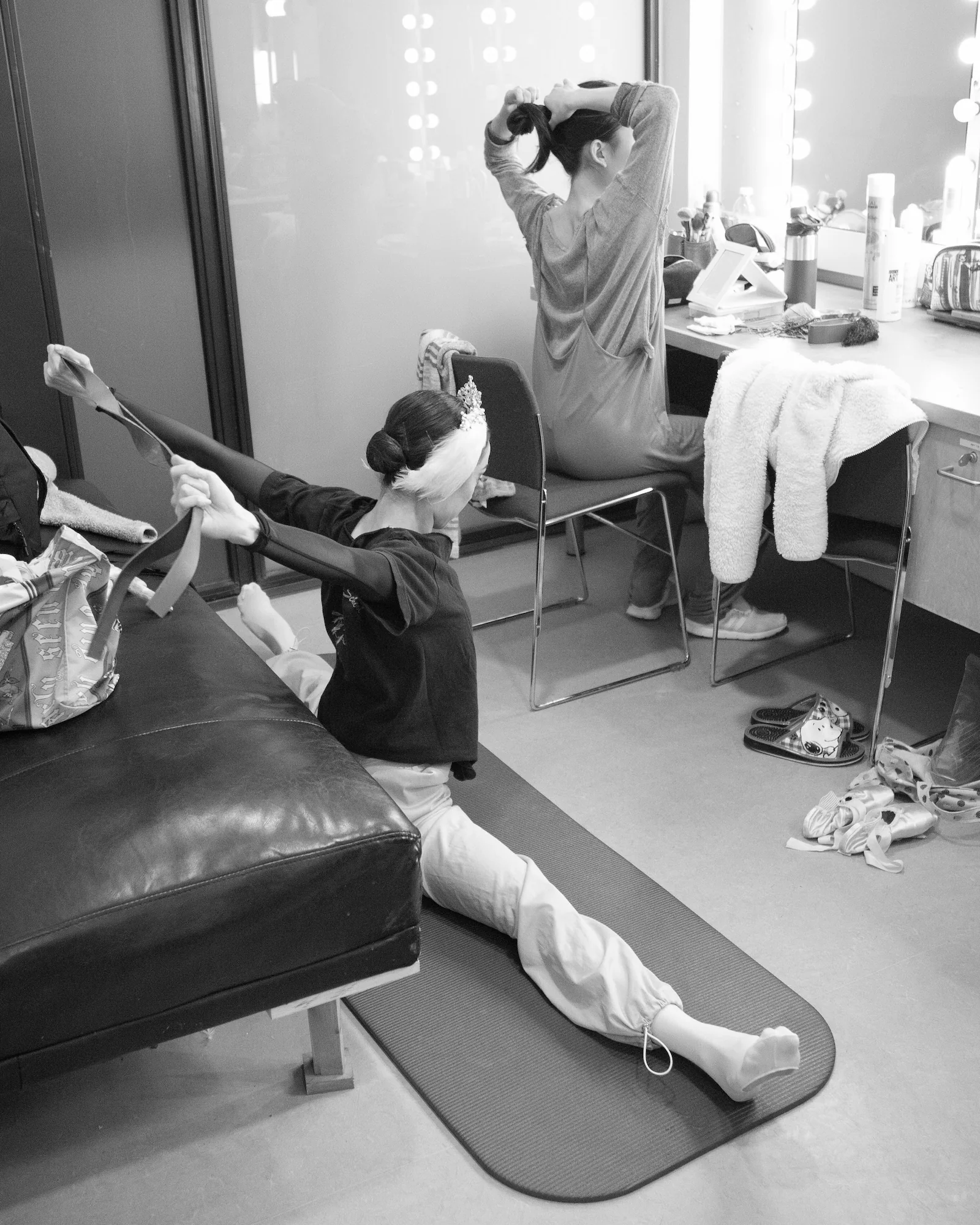
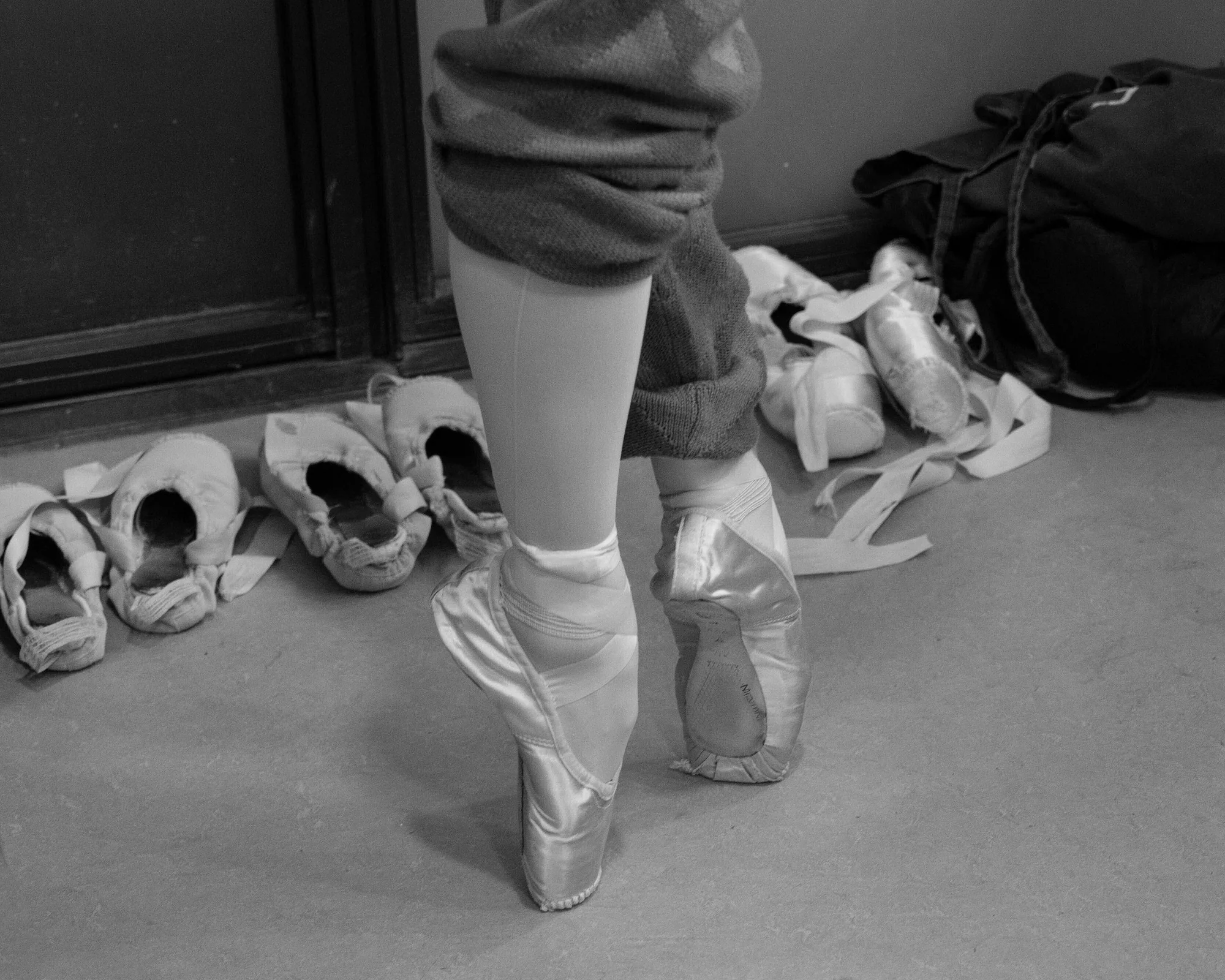
Photography Caroline Holden, by kind permission of Birmingham Royal Ballet. Miki Mizutani
Which role (Odette/Odile) do you prefer dancing?
I love dancing both roles because they’re such different characters, but if I had to choose, I’d say Odette. She’s so delicate, vulnerable and emotional. That said, it’s also a lot of fun to play Odile and seduce the prince with her confidence and power.
What are your feelings towards these roles?
I believe Odette truly loves the prince, and because of that, she forgives him. Their love feels genuine to me, which is what makes the story so heartbreaking.
As for Odile, I see her as very much her father’s daughter - they share the same ambition and desire to deceive the prince.
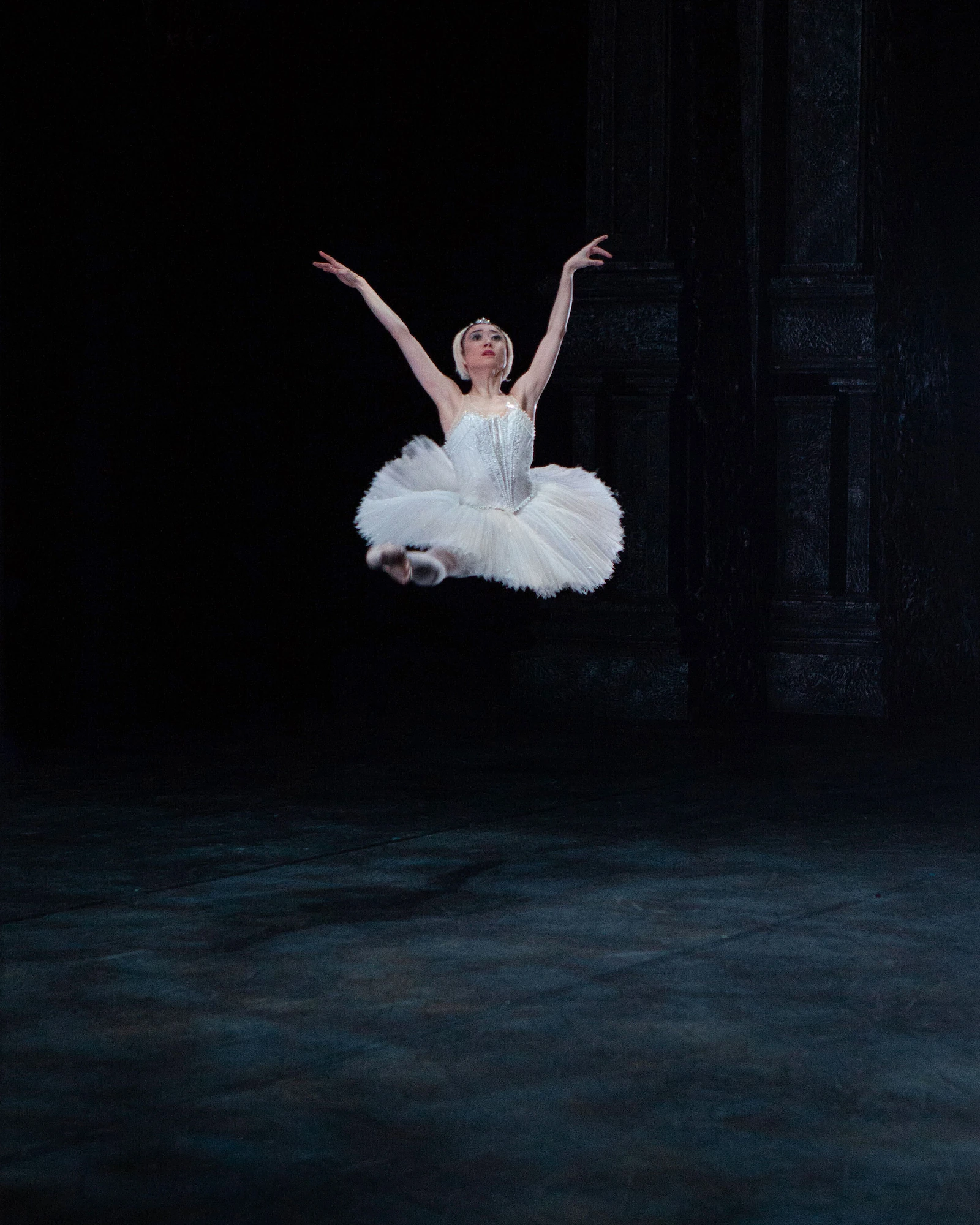
Photography Caroline Holden, by kind permission of Birmingham Royal Ballet. Miki Mizutani. Odette’s grand jeté onto the stage.
Was it something you dreamed of dancing?
Absolutely. Swan Lake was the first ballet the company performed after I joined, and I danced one of the Vision Swans in Act III. So dancing Odette/Odile was a dream come true.
Every time I dance Swan Lake, it feels magical. Birmingham Royal Ballet performs Sir Peter Wright’s beautiful production, and I think it’s incredibly special. The choreography, the stunning sets and costumes, and the music all come together so perfectly. It’s one of those ballets where everything complements each other beautifully, making it just as magical for the dancers as it is for the audience.
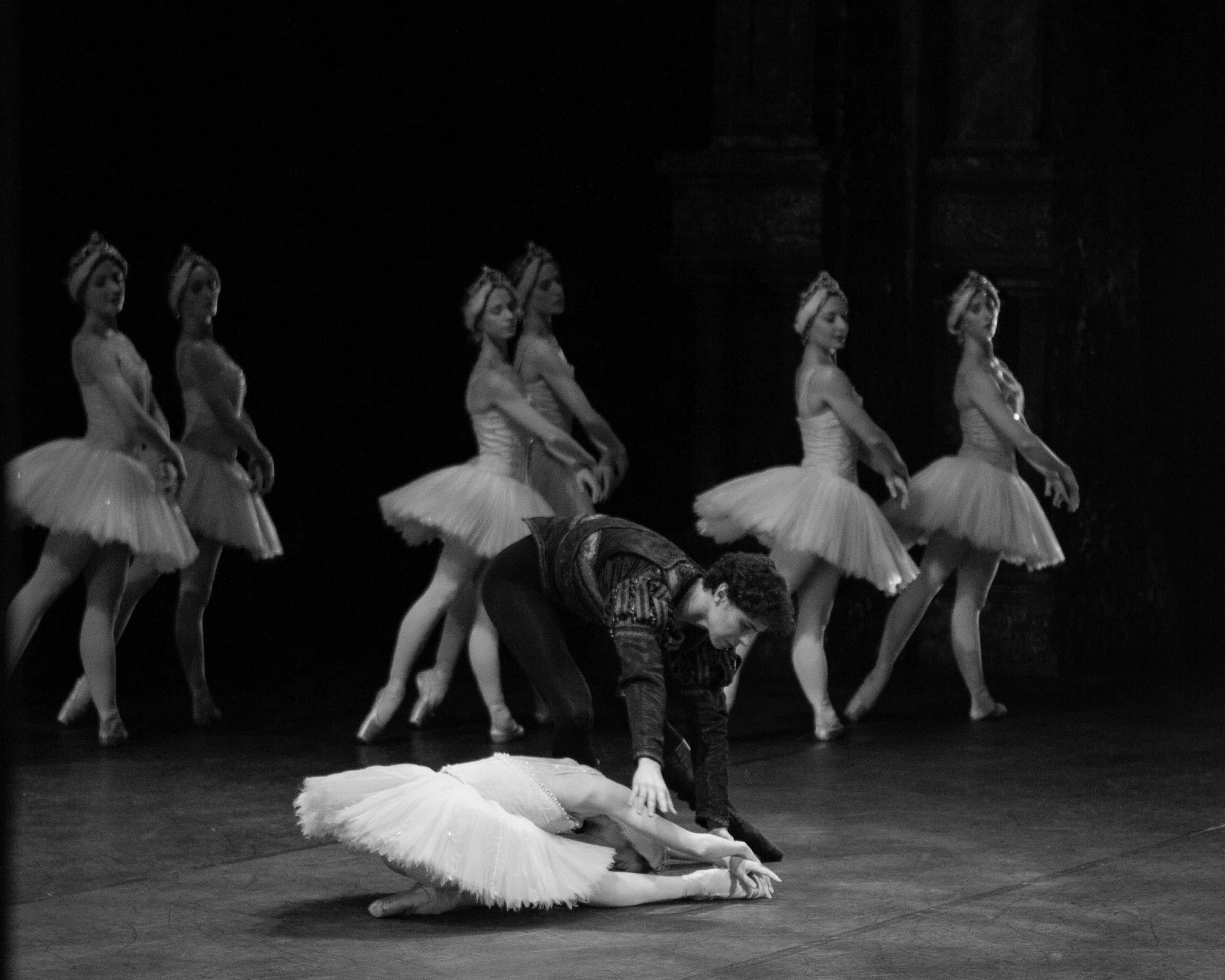
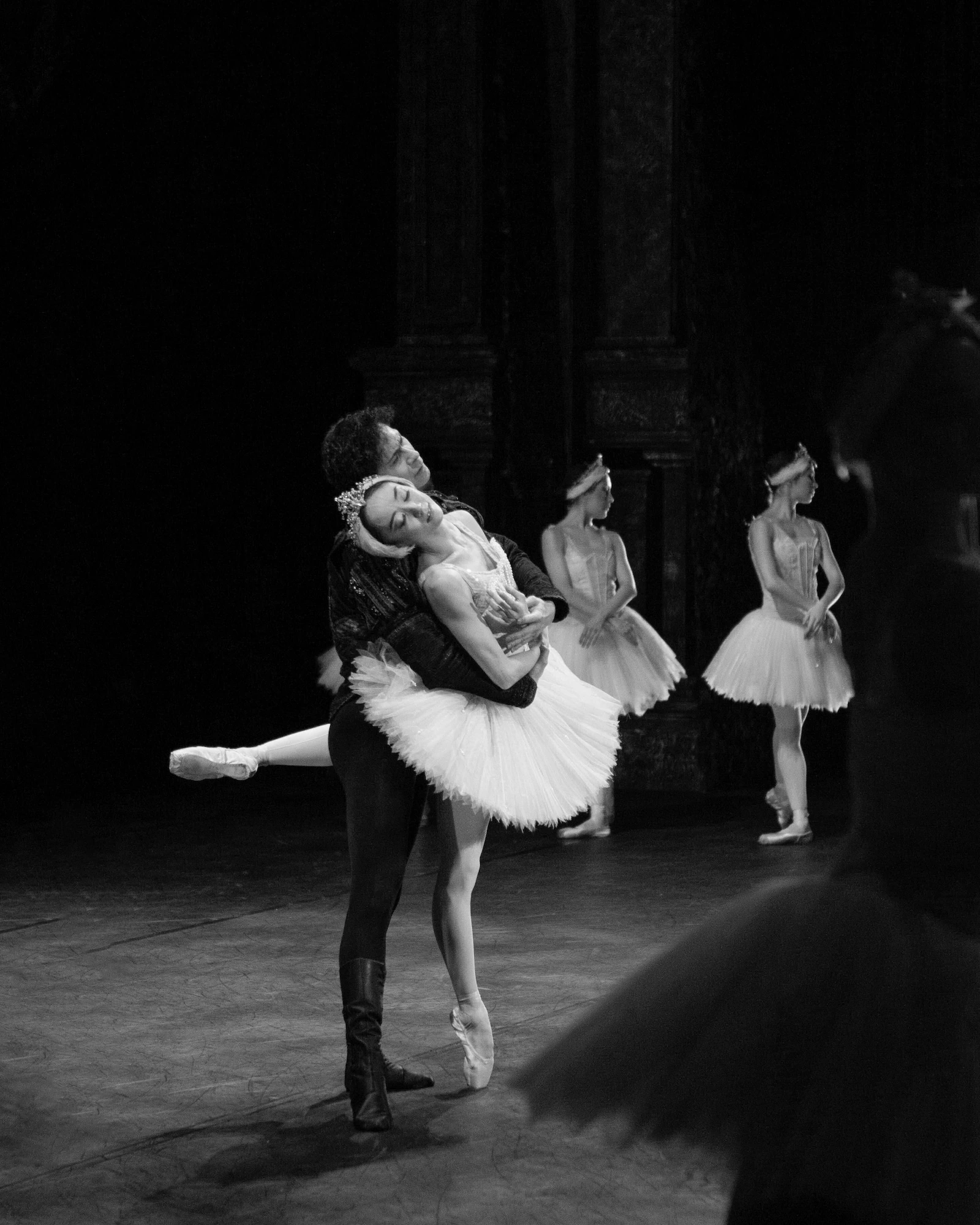
Photography Caroline Holden, by kind permission of Birmingham Royal Ballet. Miki Mizutani and César Morales
Which dancers inspired you?
I’ve always admired former Birmingham Royal Ballet Principal Nao Sakuma. Her artistry and acting always drew me into the story. I was incredibly lucky to watch her rehearsals and performances up close, and I learned so much from seeing her work.
I’m also inspired by Marianela Nuñez. Her technique is extraordinary, and her beautiful arabesque line is just out of this world. She combines incredible precision with such warmth and artistry, which is something I really admire.
This role requires acting as well as dance skills. How did you prepare to dance it?
It’s one of the most challenging roles, both technically and artistically. I was fortunate to be coached by Marion Tait, who taught me so many details about the character and the meaning behind each moment. I also learned a lot by watching the amazing principal dancers who performed the role before me.
What advice were you given and would pass on to others?
Find your own story. Sometimes that takes time, but that’s what makes live performance so special, every dancer brings something unique to the role. Learn from others, but don’t be afraid to find your own interpretation. And don’t be afraid to make mistakes. It’s a long ballet, and what’s most important is dancing from the heart.
How do you prepare your arms for the graceful movements of a swan?
It’s hard! Those movements aren’t natural for the human body. Everything has to come from your back rather than just your arms. The more you practise, the more natural it becomes.
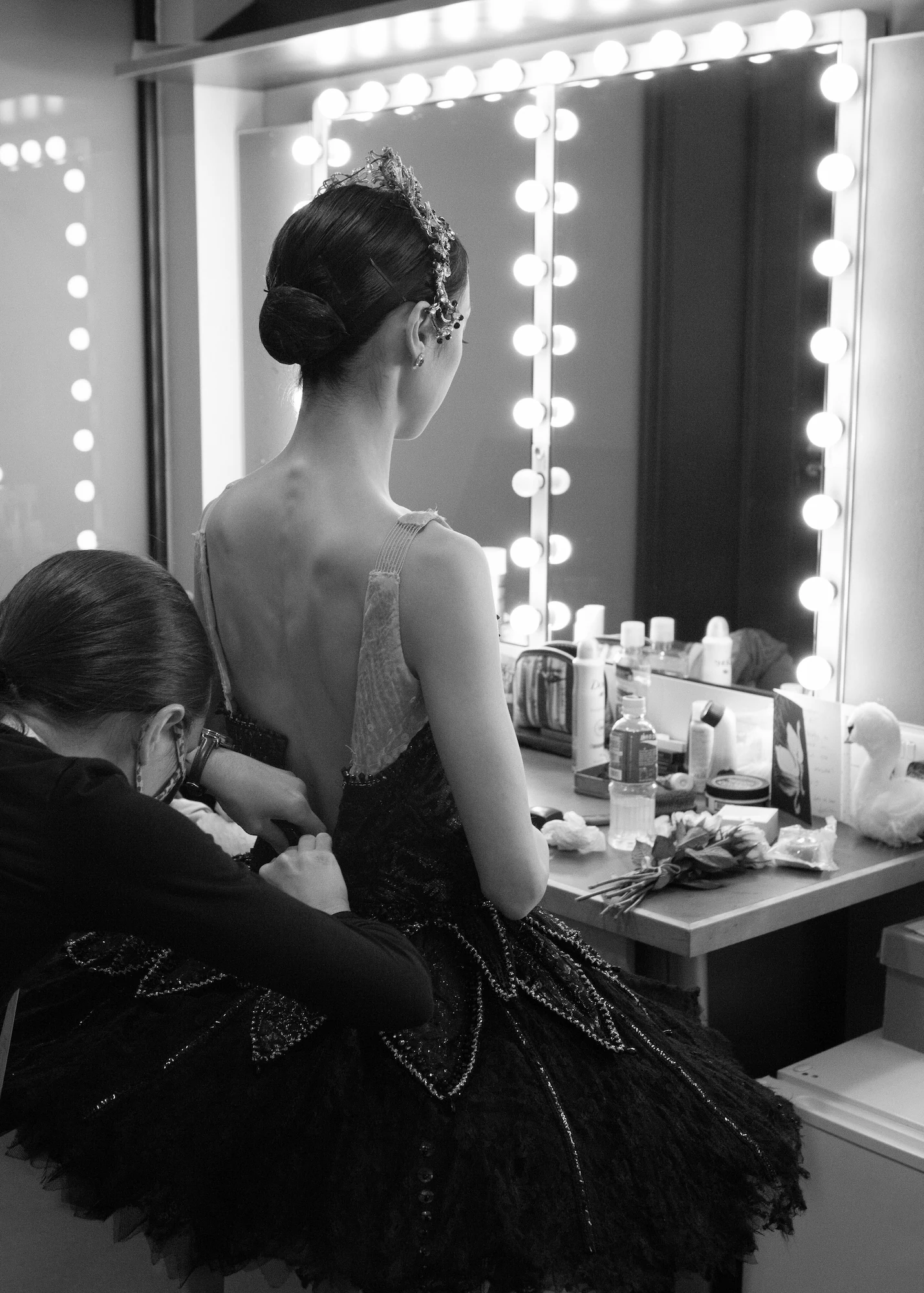
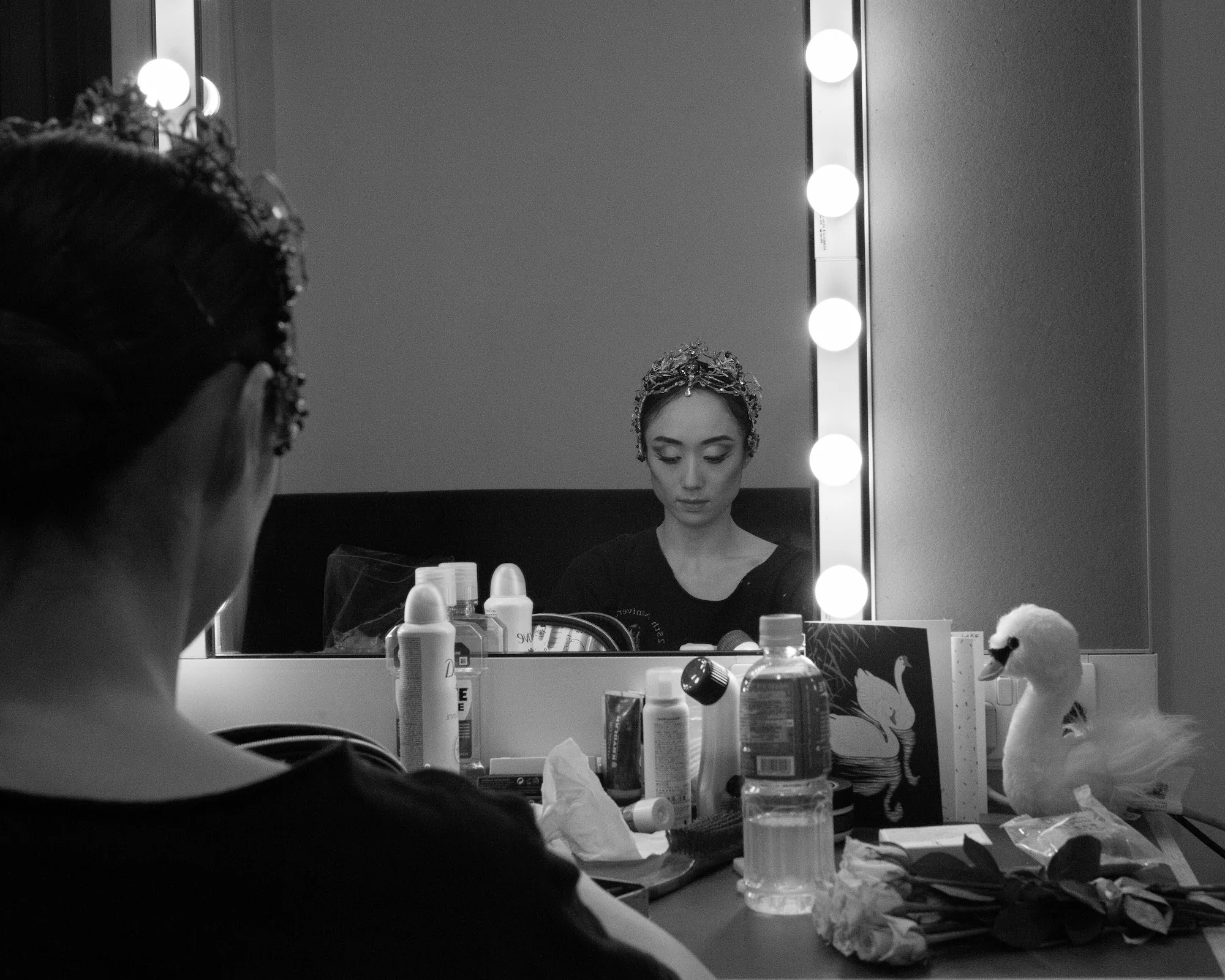
Photography Caroline Holden, by kind permission of Birmingham Royal Ballet. Miki Mizutani
How do you prepare your pointe shoes and feet before wearing them?
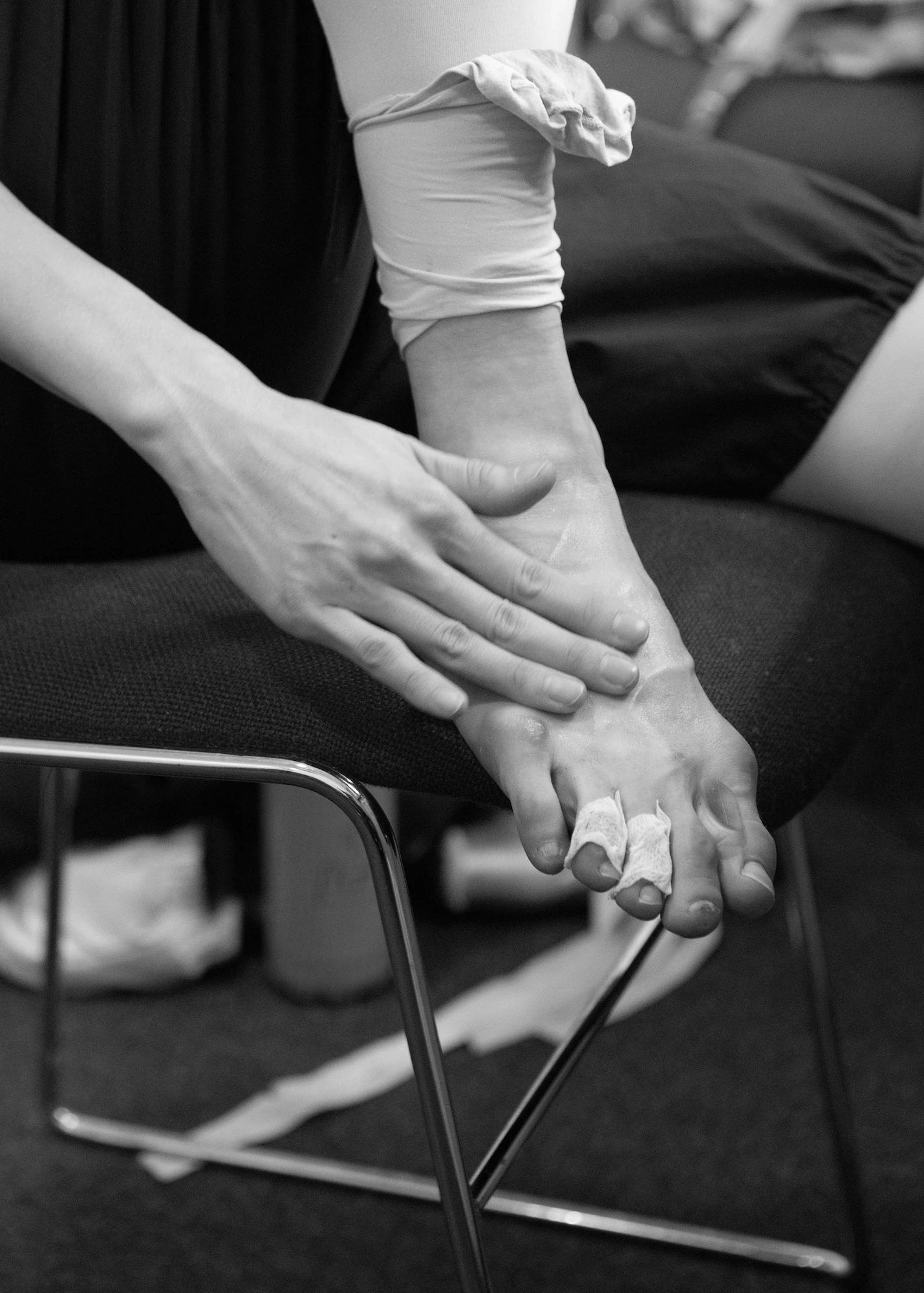
With a new pair, I bend the sole slightly towards the toes. I also sew around the platform to help it last longer and stop the big toe side from becoming too soft. I use quite a lot of shellac for Swan Lake because I need the shoes to stay strong throughout the performance.
I tape any areas where I have blisters. I don’t wear toe pads because I like to feel the floor - it gives me a better grip and more control.
Sometimes, with plenty of shellac, a pair can last for a few weeks. Other times, they only last a single performance. I wear Freed pointe shoes made specially for me, but I use different pairs for different acts.
Your first entrance as Odette has you flying on stage. How do you prepare for this in the wings?
Even though my first entrance begins with a big jump, I keep my warm up quite normal. I’ll do a light class and make sure my body is ready, but I don’t spend lots of time practising big jumps. I don’t want it to look like I’m jumping - I want it to look like I’m flying, so I try to keep that feeling fresh for the performance.

Photography Caroline Holden, by kind permission of Birmingham Royal Ballet. Miki Mizutani
Favourite moment in the ballet?
Act IV is my favourite. It begins with the beautiful moment when the swans emerge through the smoke, it’s so magical. Then Odette enters, full of sorrow, followed by the emotional pas de deux with the prince and the dramatic ending. It’s such a powerful act from beginning to end.
Have any strange or funny things happened while dancing this role?
Nothing too dramatic has happened to me personally! Swan Lake is such a long, four-act ballet that little unexpected things happen in almost every performance, so I can’t remember one particular moment. That’s the nature of live theatre. You just stay in character and keep going. I do remember seeing other dancers have some funny mishaps on stage though, and those moments always make us smile afterwards!
Does it feel different performing with different partners?
Absolutely. Every partner brings something different to the story. The choreography stays the same, but the chemistry, timing and emotions can feel completely different. That’s one of the things I love most about performing - it keeps the role fresh every time.
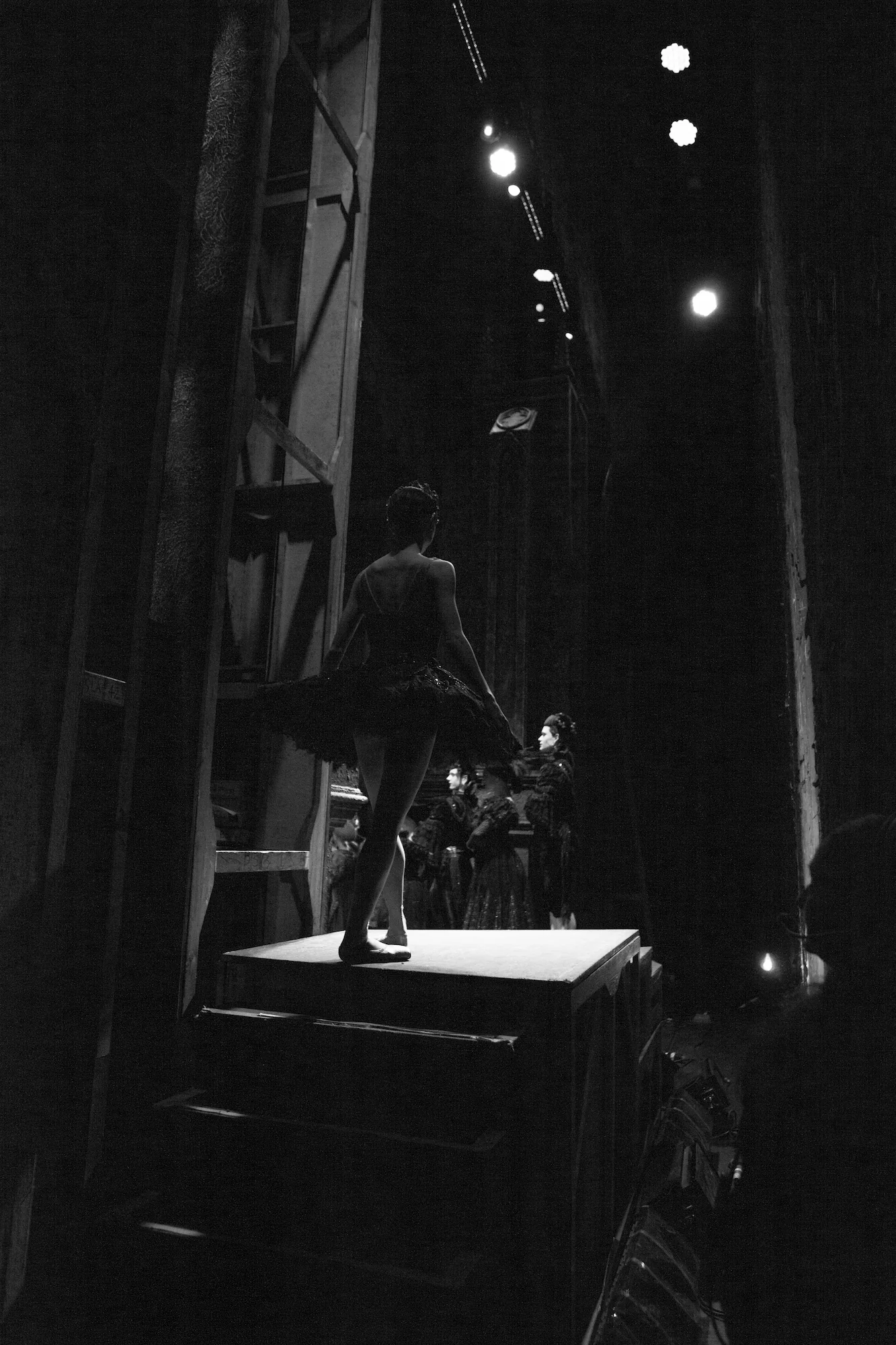
Photography Caroline Holden, by kind permission of Birmingham Royal Ballet. Miki Mizutani. Odile’s entrance from the wings.
Can you describe the rehearsal process?
We usually rehearse separately at first. The principals work on the pas de deux and solos, while the corps de ballet rehearse their own sections. We put everything together closer to the performances. Although Odette doesn’t interact with the corps very much until Act IV, they’re such an important part of the ballet. They create the world around the characters, and without them the story wouldn’t have the same impact.
How difficult are the 32 fouetté at the end of the ballet?
They’re incredibly challenging because they come at the end of the Black Swan pas de deux, after a long solo and a demanding pas de deux. And unlike many people think, it’s not the end of the ballet - you still have the whole fourth act to dance. By then, especially after Act II, your supporting leg is already very tired, so it’s a real test of both stamina and concentration.
Which ending do you prefer?
I love the traditional ending where Odette and the Prince are reunited through their love. It’s tragic, but also hopeful and incredibly moving. I think it gives the story a beautiful emotional ending.
Do you curtsey differently as Odette/Odile?
Yes. As Odette, my curtsey is soft, gentle and delicate. As Odile, it’s much stronger, more confident, and full of authority.
How long does the music stay in your head once a performance is ended?
Forever! Whether we’re performing Swan Lake or not, the music never really leaves me. It’s one of those scores that stays with you for life.
Do you have a lucky white feather?
I don’t actually have one! Maybe I should start carrying one now!

Photography Caroline Holden, by kind permission of Birmingham Royal Ballet. Miki Mizutani & Lachlan Monaghan
I first photographed Birmingham Royal Ballet’s Swan Lake from the wings with principal dancers Miki Mizutani and Lachlan Monaghan in 2020. This was the start of a special collaboration with Miki, and I have since photographed her preparing for her roles of the Sugar Plum Fairy, Odette/Odile, Princess Aurora and Cinderella. I’m hoping that I’ll get the opportunity to photograph her as Juliet when it comes back into the company’s repertoire.
Miki trained at the Acri-Horimoto Ballet Academy in Japan and was awarded the Prix de Lausanne scholarship in 2009. She joined Birmingham Royal Ballet in 2012 and was promoted to principal in 2022.
With her natural stage presence and technical artistry, she effortlessly embodies the many leading roles in the company’s repertoire as well as being involved in creating new works.
She’s also great fun to work with, even in these heightened moments where we’re working within the time constraints of a live performance, and she evolves further into the role she’s dancing.